 Reviews



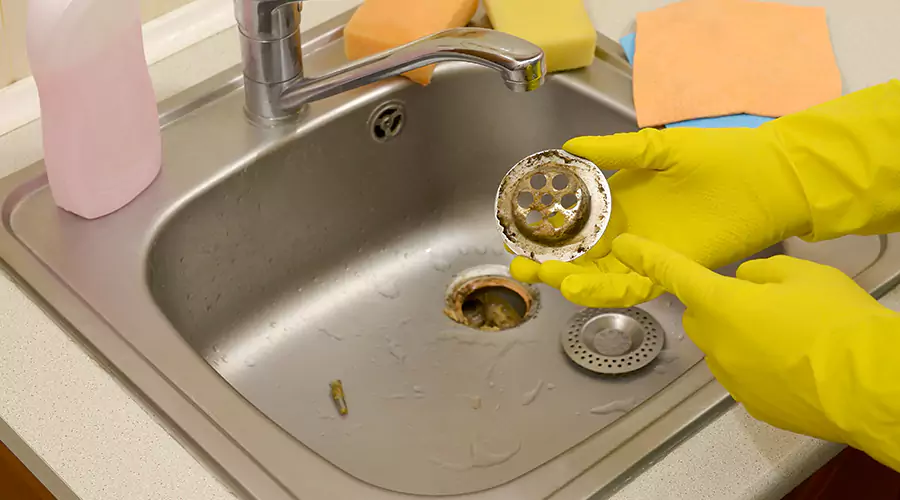
A sink drain usually smells because food residue or hair has collected inside the pipe and created conditions for bacterial growth. A dry P-trap can also allow sewer odors to enter the room. Professional drain cleaning averages $246 in the United States according to August 2026 pricing data, with typical costs ranging from $147 to $352. Sink drain replacement may be needed when the existing drain assembly is damaged, corroded, or continues to cause problems after cleaning.
The source of the smell matters because different odors require different solutions. Cleaning a dirty drain can eliminate odors caused by decomposing material. However, a missing water seal or plumbing vent problem needs a different approach.
Understanding why a stinky sink drain develops is the first step toward removing the odor and preventing it from returning.
What Causes a Sink Drain to Smell Bad?
A sink drain develops unpleasant odors when organic material remains inside the plumbing or the drain loses its protective water seal. Food particles can decompose inside kitchen drains. Bathroom drains commonly collect hair and soap residue. These materials support bacterial growth and can produce persistent smells.
Several conditions can cause unpleasant drain odors:
- Food buildup: Small food particles can remain inside kitchen drainage pipes and gradually decompose.
- Grease accumulation: Cooking grease coats the inside of pipes and traps additional organic material.
- Hair and soap residue: Bathroom drains can develop sticky deposits that support bacterial growth.
- Dirty garbage disposal: Food residue can collect inside the disposal chamber and beneath its rubber splash guard.
- Dry P-trap: An unused sink can lose its protective water seal through evaporation.
- Plumbing vent problems: Changes in drain pressure can disturb the water seal and allow unpleasant gases to enter the room.
The distinction between organic buildup and sewer gas is particularly important. Both can create unpleasant odors, but their underlying causes are different.
What Does the Type of Drain Smell Tell You?
Different odors provide useful clues about what is happening inside the plumbing. A sour smell often indicates decomposing food. A musty odor can result from bacterial buildup, while a persistent sewage smell can indicate that sewer gases are passing through the drain system.
The following comparison can help narrow the possibilities.
| Type of Smell | Possible Cause | First Action | Potential Repair Cost in 2026 |
|---|---|---|---|
| Sour food odor | Food trapped in the drain | Remove accessible debris | Usually a DIY cleaning task |
| Musty odor | Hair or bacterial buildup | Clean the stopper and upper drain | Usually a DIY cleaning task |
| Greasy odor | Kitchen drain residue | Inspect the strainer and P-trap | 147–352 if professional cleaning is needed |
| Sewer-like odor | Dry trap or drainage problem | Check the P-trap water seal | Depends on the underlying problem |
| Persistent odor with slow drainage | Partial blockage | Investigate the drain restriction | 147–352 for typical drain cleaning |
The professional cleaning figures reflect reported U.S. prices rather than a guaranteed charge for every odor problem. Repairs involving damaged piping or ventilation can cost more.
Why Does My Sink Drain Smell Like Rotten Eggs?
A rotten-egg smell can indicate sewer gases entering through a drain that has lost its water seal. Organic material can also release sulfur-containing compounds as it decomposes. The odor alone cannot establish which condition exists, so the sink's usage pattern and drainage behavior deserve attention.
Begin by considering whether the sink is used regularly.
An unused guest bathroom is more likely to experience water evaporation from the trap. A frequently used kitchen sink is more likely to contain organic residue, although other causes remain possible.
Check for these additional symptoms:
- The smell becomes stronger after the sink has been unused for several days.
- Running water temporarily eliminates the odor.
- The smell returns even though the drain is visibly clean.
- Gurgling occurs when another fixture drains.
- Multiple household drains develop similar odors.
- The sink empties unusually slowly.
- Water appears to be missing from an accessible fixture trap.
- The odor becomes noticeable when another plumbing fixture operates.
An odor associated with several drains or changes in plumbing pressure can indicate a problem beyond the individual sink.
Can a Dry P-Trap Make a Sink Smell?
A dry P-trap can allow sewer gases to enter a room because the water normally held inside the curved pipe forms a protective barrier. Evaporation can remove that barrier when a sink remains unused for an extended period.
The simplest diagnostic test requires no plumbing disassembly.
- Run clean water into the sink for approximately one minute.
- Stop the faucet and allow the bathroom air to clear.
- Check whether the unpleasant smell becomes weaker.
- Observe the sink again later that day.
- Repeat the observation over the following days.
If the odor disappears after running water and remains absent, evaporation is a plausible explanation.
However, a smell that quickly returns despite regular sink use may indicate that the trap is losing water for another reason. Drainage or venting conditions can sometimes disturb the water seal.
How Does Organic Buildup Create Drain Odors?
Organic buildup creates odors when bacteria break down material trapped inside the drain. Grease can hold food particles against kitchen drain surfaces. Bathroom drains collect soap residue and hair, which can support a similar layer of buildup.
This accumulation is often called biofilm.
It can remain attached to drain surfaces even when water passes through the pipe normally. As a result, a sink may smell unpleasant without showing obvious drainage problems.
The upper section of the drain deserves particular attention because it can collect residue around the stopper or strainer. Cleaning this accessible area removes material that liquid rinsing may leave behind.
How Do You Clean a Smelly Sink Drain?
Cleaning a smelly drain should begin with removing visible residue rather than masking the odor with fragrance. Physical cleaning is particularly useful when deposits remain attached to the stopper or upper drain.
Follow these steps:
- Remove the stopper or strainer. Identify how the component attaches before attempting removal.
- Clean visible debris. Pull out trapped hair or food and dispose of it in the trash.
- Scrub accessible surfaces. Use a suitable drain brush with dish soap and warm water.
- Inspect the upper pipe. Look for remaining residue around the drain opening.
- Rinse the drain. Use hot tap water at a temperature appropriate for the piping.
- Reinstall the components. Confirm that the stopper moves normally.
- Check the odor. Allow the sink to sit unused briefly before evaluating the result.
Physical cleaning removes the material supporting odor-producing bacteria. It also makes it easier to determine whether a smell originates farther into the drainage system.
Can Baking Soda and Vinegar Remove Sink Drain Odors?
Baking soda and vinegar are sometimes used for light drain cleaning. The mixture creates a short-lived bubbling reaction that can help disturb minor residue. However, it cannot reliably remove a dense hair obstruction or repair a missing P-trap water seal.
Physical cleaning should come first when debris is visible.
If you choose to use a household cleaning mixture, follow appropriate cleaning guidance and confirm that no incompatible product is already inside the drain.
Never combine vinegar with bleach or commercial drain opener. Mixing household cleaning products can release dangerous gases. The CDC explicitly advises against mixing bleach with other cleaning products.
When Should You Call a Professional?
Professional diagnosis becomes appropriate when a persistent sewer-like smell remains after the drain has been cleaned and the P-trap has been refilled. Gurgling throughout the plumbing system or wastewater returning through other fixtures also suggests that routine surface cleaning may not address the cause.
Professional drain cleaning averages approximately $246 in 2026. The reported U.S. range is $147 to $352 for typical cleaning projects.
Consider professional inspection when:
- A sewer-like odor returns shortly after the trap has been refilled.
- Several household drains develop unpleasant smells.
- The sink gurgles when another plumbing fixture operates.
- Wastewater backs up through the sink.
- Persistent odor accompanies repeated drain blockages.
- Accessible plumbing shows signs of damage.
A professional can investigate conditions beyond the visible drain opening and determine whether drainage or ventilation needs attention.
How Can You Prevent Sink Drain Odors?
Preventing drain odors begins with keeping organic material out of the plumbing. Regular surface cleaning reduces the residue available for bacterial growth. Rarely used sinks also need enough water to maintain their P-trap seals.
A practical maintenance routine includes:
- After regular use: Remove visible food or hair from the strainer.
- Weekly: Clean accessible drain components and remove accumulated residue.
- Every few weeks: Inspect the stopper or disposal splash guard when applicable.
- During extended periods of nonuse: Run water in sinks that are rarely used.
- Whenever drainage slows: Investigate developing buildup before it becomes a complete blockage.
Avoid pouring cooking grease into kitchen drains. Physical prevention is generally more effective than repeatedly treating accumulated residue. The EPA also advises keeping cooking oil and grease out of household drainage systems.
Conclusion
A stinky sink drain usually results from organic buildup or a problem with the drain's water seal. Identifying the odor and observing when it appears can help narrow the cause. Clean accessible residue before trying stronger methods. Refill the trap if the sink has been unused. Persistent sewer odors or symptoms affecting several fixtures deserve professional investigation. This week, inspect your sink stopper and remove accumulated material.
Frequently Asked Questions
Why does my sink drain smell even after cleaning?
Residue may remain deeper in the drain. A dry P-trap or another drainage problem can also produce persistent odors.
Can a sink smell bad without being clogged?
Yes. Biofilm can produce odors without restricting water flow enough to cause noticeable drainage problems.
Why does my sink smell worse when I run water?
Running water can disturb existing residue and make its odor more noticeable. Changes in drainage pressure can also contribute to odor problems.
Can an unused sink develop sewer odors?
Yes. Water can evaporate from the P-trap during extended periods of nonuse.
Does pouring hot water down the drain eliminate bad smells?
Hot water can rinse loose residue. Persistent buildup generally requires physical cleaning.